Cherokee County tree removal laws[1] exempt single-family homeowners from permit requirements for routine yard maintenance on non-specimen trees outside protected buffers. However, removals involving designated Heritage Trees, protected 25-foot state waters stream buffers under O.C.G.A. § 12-7-1, or land disturbances over 1 acre require formal municipal permits and arborist site review.
URGENT: Hazardous Tree Emergency or Active Code Issue?
If you have an immediate tree crisis , including storm-damaged trees threatening rooflines, split trunks, or imminent structural hazards, prioritize personal safety. Note that standard homeowners insurance generally does not cover preventative tree removal unless a covered structure has sustained direct physical damage. Document the hazard with photos and contact professional tree specialists for prompt hazard assessment and safe mitigation.
Call Supreme Arbor, LLC (470) 863-3083 [Featured Tree Care Partner]Executive Summary / Key Legal Takeaway
In unincorporated Cherokee County, existing single-family and duplex homeowners are generallyexemptfrom tree removal permits for standard yard maintenance. However, government authorizationis mandatoryunder local code and Georgia state law if:
- The tree is designated as a registeredHeritage Treeunder local ordinance.
- The tree is located inside aprotected 25-foot state waters buffer (or 50-foot trout stream buffer) under Georgia EPD O.C.G.A. § 12-7-1[2].
- The tree falls within anundisturbed zoning bufferor tree-save area established during subdivision approval.
- The property is undergoingland disturbance, grading, or commercial development(1+ acre clearing) regulated by theCherokee County Development Service Center.
- The property is inside city limits likeCanton, Woodstock, Holly Springs, or the City of Atlanta.
Municipal Ordinances & Survey Verification: Tree protection ordinances and buffer restrictions vary between unincorporated Cherokee County, Woodstock, Canton, and Holly Springs. Information provided here does not constitute formal survey boundary determinations or certified arborist hazard assessments. Cutting trees across boundary lines without written owner consent can trigger statutory civil liability under Georgia’s timber trespass law (O.C.G.A. § 51-12-51). Always verify boundaries with a registered land surveyor before felling trees.
Independent Commercial Contractor: Supreme Arbor, LLC is an independent commercial contractor and featured directory partner. Local Cherokee does not direct tree operations and bears no liability for contractor workmanship, personal injury, or property damage. Property owners should independently verify certificates of commercial general liability insurance before commencement of work.
Cherokee Tree Permit & Legal Risk Checker
Interactive legal analysis based on Cherokee County Ordinance Code Ch. 42 & GA EPD Regulations.
Select Your Property Jurisdiction:
Cherokee County is fortunate to have a tremendous canopy of mature oaks, hickories, and southern pines. But when property owners, developers, or tree contractors consider tree removal, they face local municipal codes, state environmental statutes, and Georgia common law precedents.
The legal reality is far more detailed than a simple binary choice. Cherokee County enforces aTree Preservation and Replacement Ordinance, but its application depends strictly on property zoning, work scope, and jurisdictional boundaries.
03 · Jurisdictional Authority1. Is Your Property Actually in Cherokee County\'s Jurisdiction?
This is the essential first step before touching any chainsaw or hiring a contractor. Cherokee County's Tree Preservation and Replacement Ordinance applies to properties inunincorporated Cherokee County. Property owners can verify their parcel boundaries on the officialCherokee County GIS Parcel Map.
If your property falls inside incorporated city boundaries such as:
- Canton (See City of Canton Development Services)
- Woodstock (See City of Woodstock Development Code Chapter 7)
- Holly Springs (See City of Holly Springs Development Code)
- Ball Ground
- City of Atlanta (See City of Atlanta Tree Protection Ordinance Code Sec. 158)
The city enforces its own distinct tree regulations and permitting procedures. For example, theCity of Cantonprovides a specific tree-removal permitting service, while theCity of Atlantaenforces one of the strictest tree protection codes in the nation, requiring permits even on private residential lots for trees ≥ 6" DBH.
| Jurisdiction | Permit Required for Homeowner? | Key Ordinance & Legal Citations |
|---|---|---|
| Unincorporated Cherokee County | Exempt(Single-Family / Duplex routine care) | Cherokee County Code Chapter 42(Exemption excludes Heritage Trees & Stream Buffers). |
| City of Canton | Partial(Based on lot canopy & specimen status) | Canton Municipal Code(Permits required for specimen tree removal & commercial clearing). |
| City of Woodstock | Conditional(Minimum canopy standards) | Woodstock Development Code Ch. 7(Requires minimum lot canopy TDU maintenance). |
| City of Atlanta | Mandatory(For trees ≥ 6" DBH) | Atlanta Code Sec. 158(Arborist visit, 14-day posting & recompense fees: $100 + $30/inch). |
| State Waters Buffers | Mandatory Variance(25-ft / 50-ft buffers) | GA EPD O.C.G.A. § 12-7-1(Strict undisturbed vegetative stream buffer protections). |
2. Does Every Homeowner Need a Permit to Remove a Tree?
No - not necessarily. Under the Cherokee County Tree Preservation Ordinance(Section 4.0 / Section 7.0), existing single-family residential homeowners enjoy broad exemptions for routine yard maintenance.
However, the exemptionDOES NOT APPLY if:
- The tree is designated as a registeredHeritage Tree.
- The tree is located within aprotected 25-ft state waters buffer under O.C.G.A. § 12-7-1.
- The tree is inside a mandatory undisturbed zoning setback established during subdivision platting.
- The tree removal is part of land clearing, grading, or sub-dividing requiring a Land Disturbance Permit (LDP).
3. Georgia Common Law: Neighbor Trees & Property Lines
Property boundary tree disputes across Cherokee County are governed by establishedGeorgia Common Lawprecedents:
Line Trees (Trees Straddling Property Lines)
Under Georgia case law, a tree whose trunk straddles the boundary line between two properties is classified as aLine Treeco-owned by both property owners. Neither neighbor has the legal right to cut down or destroy a Line Tree without the express written consent of the adjoining owner.
Encroaching Branches & Roots
Under Georgia common law (Cannon v. Fedosky, Fennell v. Roberts), a homeowner has the legal right to trim overhanging branches or encroaching rootsup to their exact property line, provided they do not cross the boundary line or cause unreasonable damage (killing or structurally destabilizing the tree). Entering a neighbor's property without permission constitutes civil trespass underO.C.G.A. § 51-9-1.
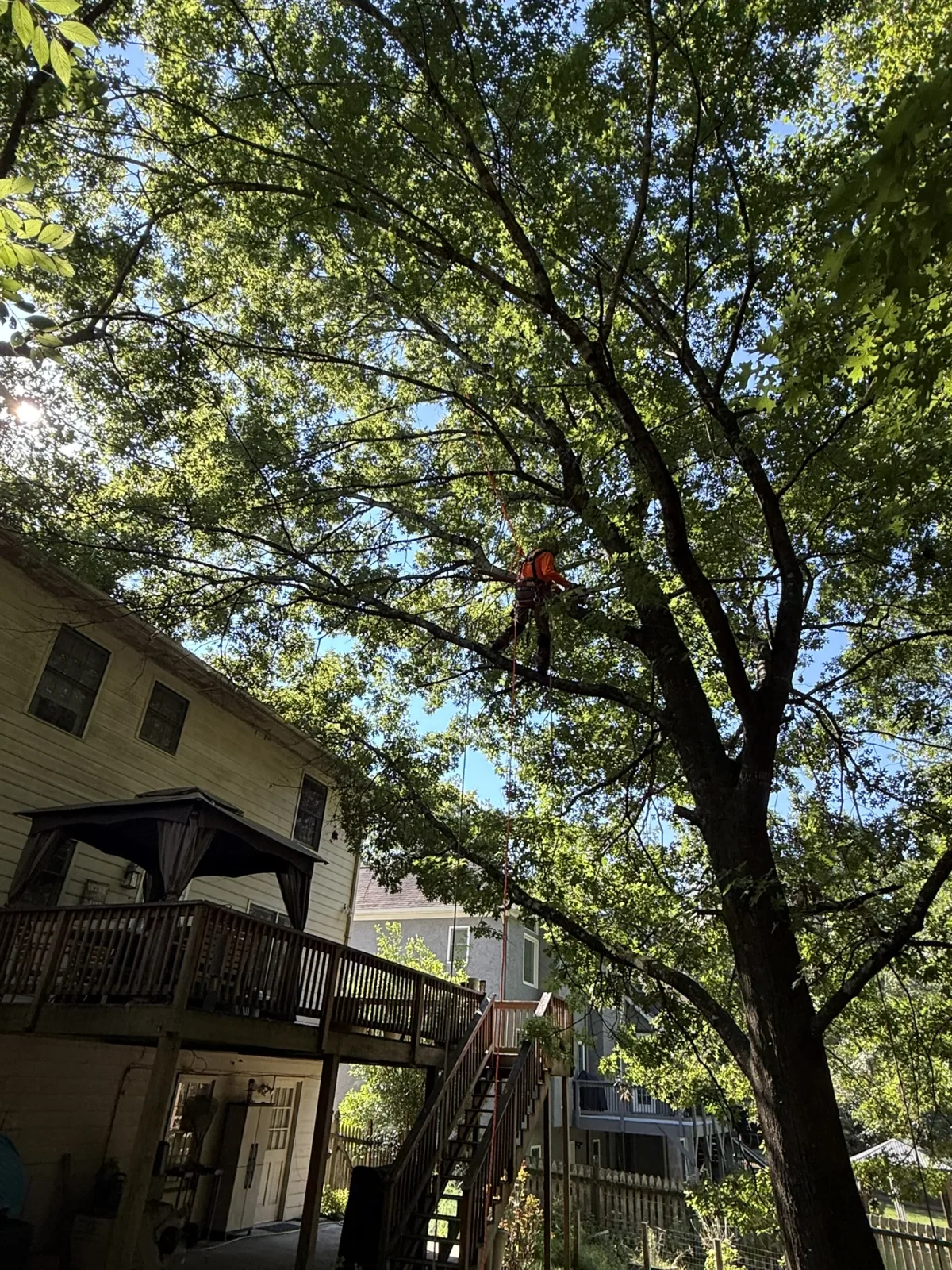
Georgia Common Law Boundary Rule (Cannon v. Fedosky, 271 Ga. App. 770): An adjoining landowner has an absolute common-law right to prune overhanging branches and penetrating root systems up to the exact vertical property plane, provided such trimming does not compromise the structural stability or cause death to the tree. Where a tree's trunk crosses the boundary line, it is classified as a "Line Tree" owned in common, unconsented destruction triggers statutory damages under Georgia timber trespass law (O.C.G.A. § 51-12-51).
Georgia Erosion & Sedimentation Control Act (O.C.G.A. § 12-7-1): Mandates a 25-foot undisturbed natural vegetative buffer along all state waters and a 50-foot buffer along designated trout streams. Tree cutting, grading, or vegetative removal within these buffer planes without an official EPD variance constitutes a statewide environmental infraction subject to immediate stop-work orders and daily administrative fines.
4. Fallen Tree Liability: Act of God vs. Negligence
When a tree or large limb falls across property lines during a storm, financial liability is governed under Georgia tort law principles:
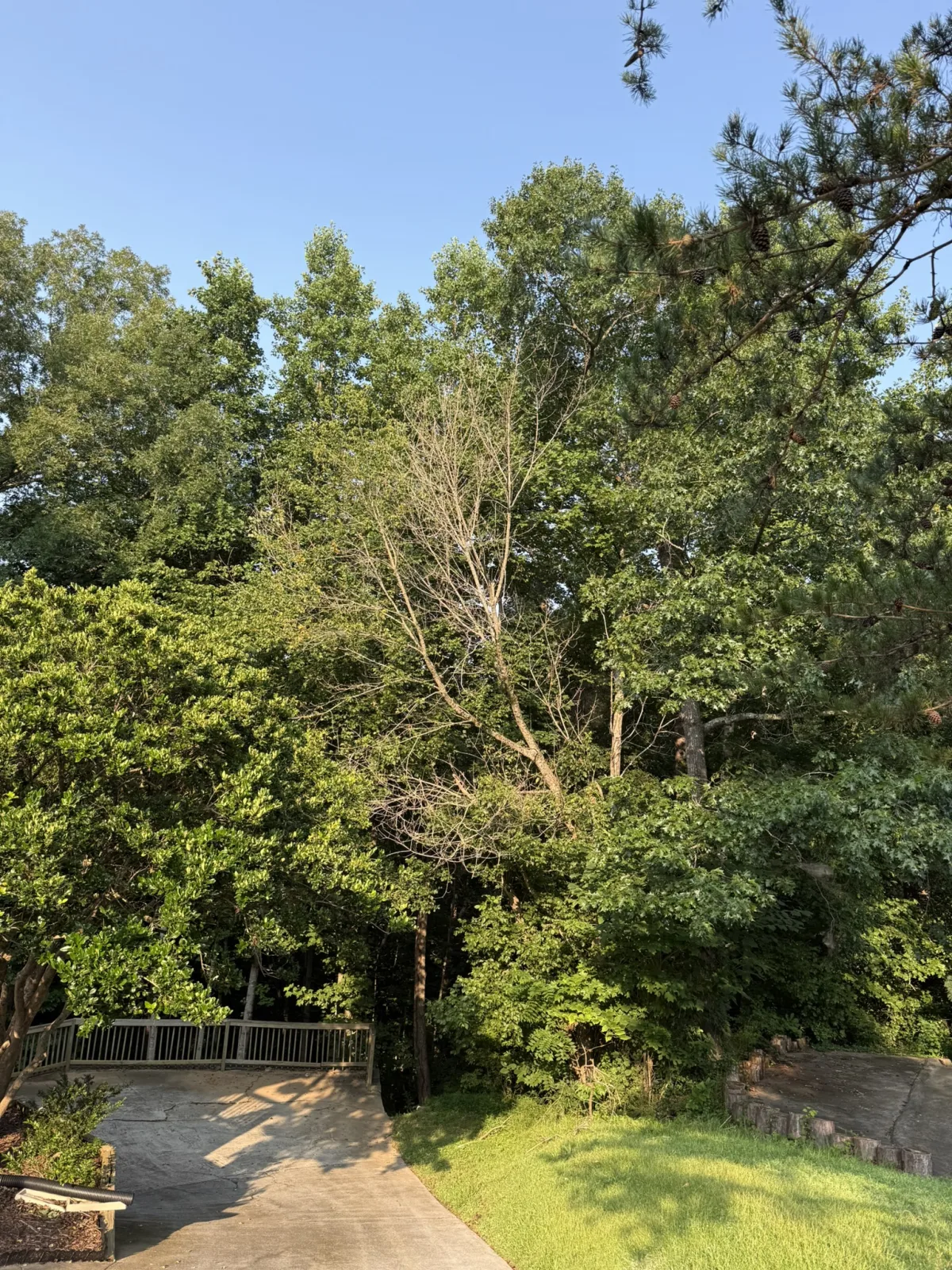
- The "Act of God" Doctrine (Healthy Trees): If a healthy, structurally sound tree falls onto a neighbor's roof or property during a severe storm, Georgia law treats the event as anAct of God. The tree owner isnot liable. The affected neighbor files a claim through their own homeowners insurance policy.
- The Negligence Standard (Decayed / Dead Trees): If a tree owner hadactual or constructive noticethat a tree was dead, diseased, or structurally dangerous, and failed to take reasonable corrective action, the owner islegally liable for negligence. Sending a polite letter via Certified Mail to a neighbor with a decayed tree establishes legal notice if a collapse occurs.
Important Insurance Coverage Reality: Leaning vs. Damaged Trees
A frequent homeowner misunderstanding is assuming that homeowners insurance will pay to cut down or remove a tree that is leaning, split, decayed, or threatening a structure. Standard homeowners insurance does NOT cover preventive tree removal. Under standard insurance practice, unless a tree or limb actually falls and causes physical damage to an insured structure (such as your home, detached garage, or perimeter fence), there is no coverage under property insurance. Tree owners are responsible for proactive maintenance and preventative mitigation before catastrophic property damage occurs.
5. HOA Covenants vs. County & Municipal Code
Homeowners must understand the distinction between public government law and private HOA covenants:[8]
- Public Law (County/City Code): Sets the statutory baseline.
- Private Contract (HOA Covenants): Enforces neighborhood architectural rules. An HOAcannotgrant permission to violate county or state stream buffer laws. However, an HOACANenforce stricter rules than the County (e.g., requiring Architectural Review Committee [ARC] approval before cutting trees in your yard). Always check both!
6. What Is a Critical Root Zone (CRZ)?
A tree's root system extends far beyond its canopy drip line. Compaction from construction vehicles or trenching can kill a tree long after machinery leaves the property. Cherokee County calculates theCritical Root Zone (CRZ)using the tree'sDiameter at Breast Height (DBH)(measured 4.5 feet above soil):
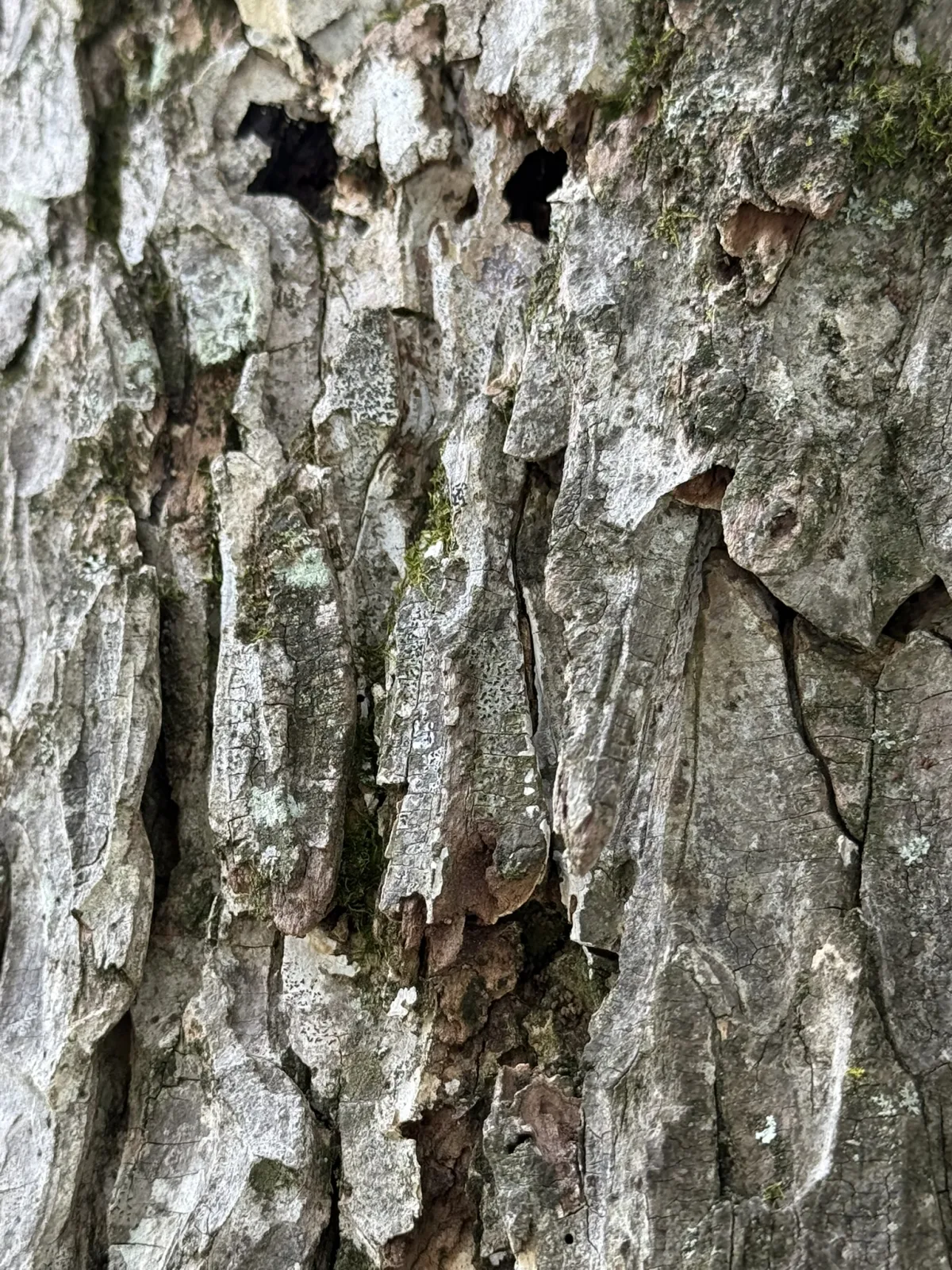
Example:A 24-inch DBH White Oak has a Critical Root Zone radius of24 to 36 feetin all directions (48 to 72 feet total diameter). Encroaching on more than20% to 25%of this root zone triggers severe structural decline or enforcement penalties.
10 · Tree Preservation7. Specimen and Heritage Trees Receive Extra Protection
Cherokee County recognizes certain trees as having exceptional size, species, and historical value.[9]
Specimen Trees
Specimen trees are healthy, high-value native trees meeting DBH thresholds:
- Overstory Hardwoods(Oak, Poplar, Hickory):≥ 24 to 30 inches DBH
- Overstory Softwoods(Pines, Cypress):≥ 30 to 36 inches DBH
- Understory Trees(Dogwoods, Redbuds):≥ 8 to 10 inches DBH
Heritage Trees
Heritage Trees receive an even higher level of protection due to extraordinary age (100+ years), historic association, or champion tree status listed on the official County Register.
Statutory Protection Warning
The standard single-family homeowner exemptionDOES NOT APPLYto Heritage Trees. Removing a registered Heritage Tree without formal written authorization from Cherokee County can trigger court fines up to $1,000 per day and mandatory 3:1 replacement planting.[10]
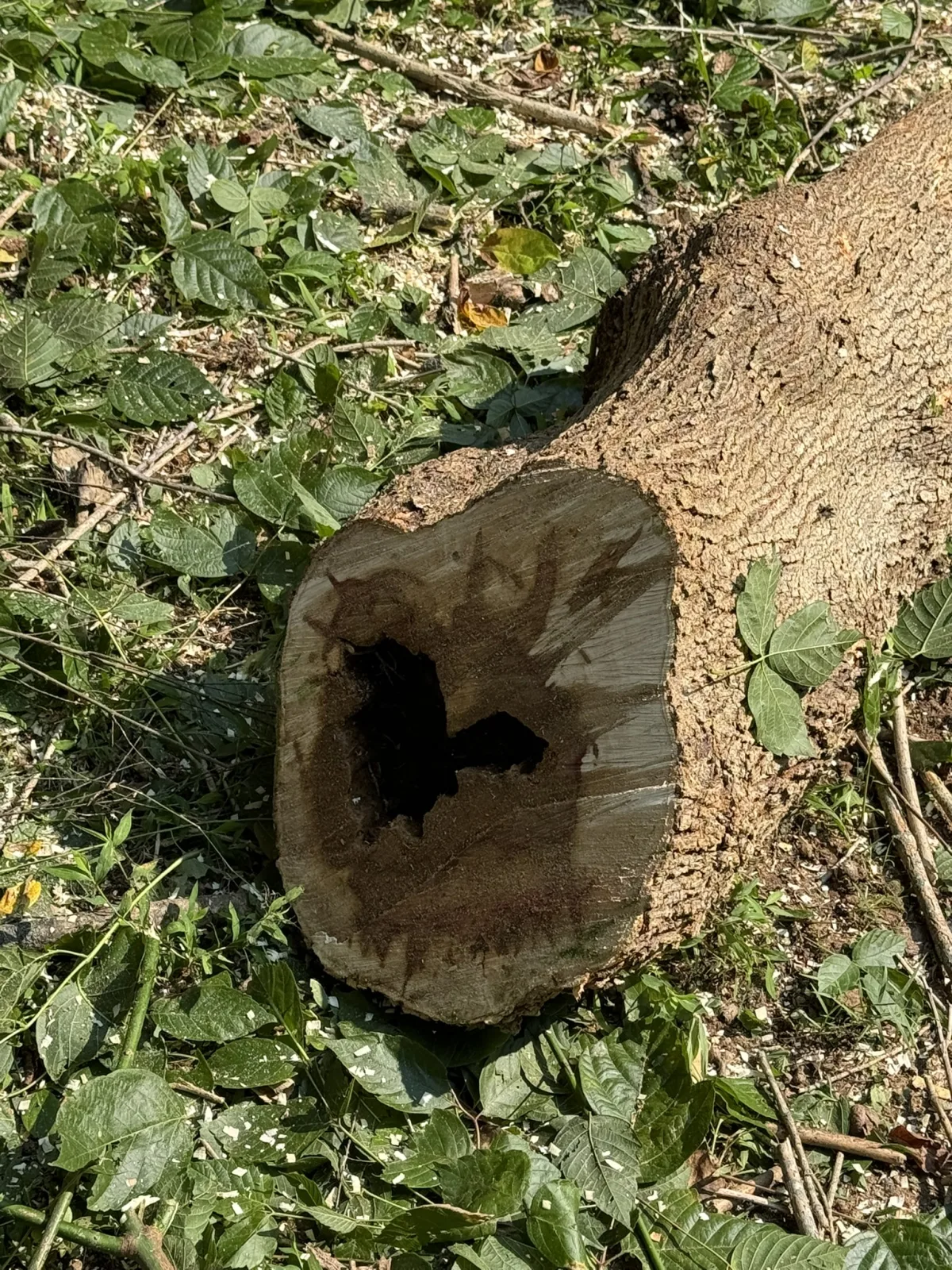
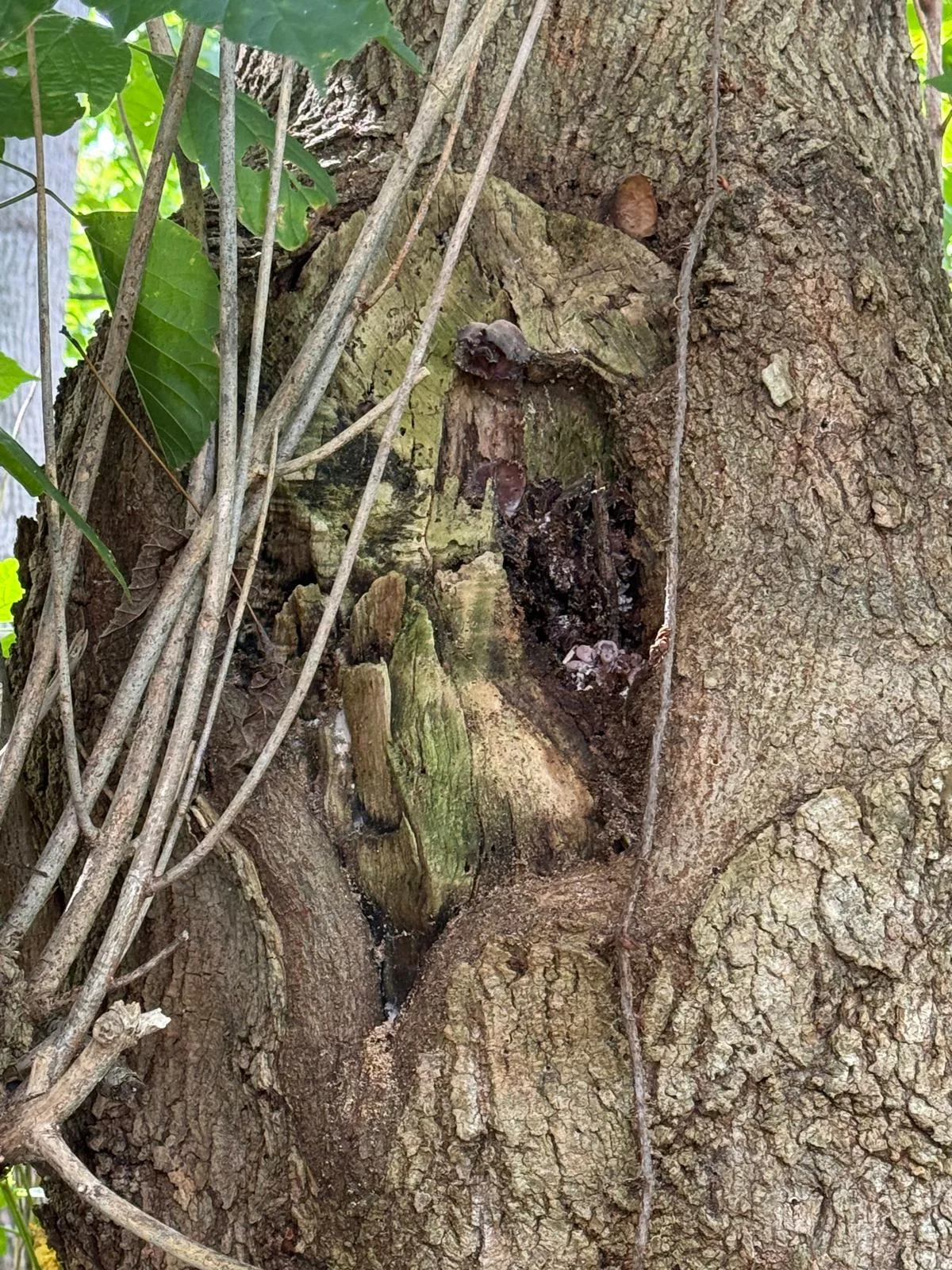
8. Dangerous or Structurally Failing Trees: Arborist Assessment
Cherokee County and surrounding cities recognize that hazardous trees pose an immediate risk to life and property. Expedited removal is authorized when documented by anISA Certified Arborist using the International Society of Arboriculture (ISA)TRAQ risk assessment protocol.
9. Tree Removal Near Creeks, Streams & State Waters
Georgia enforces statewide environmental protections underO.C.G.A. § 12-7-1 (Georgia Erosion and Sedimentation Act).
- 25-Foot State Waters Buffer: Mandatory undisturbed natural vegetative buffer along all streams, creeks, ponds, and lakes.
- 50-Foot Trout Stream Buffer: Extended undisturbed buffer along designated trout streams in northern Cherokee County.
- Variance Mandate: Any tree removal or ground disturbance inside state water buffers requires a formal variance from theGeorgia Environmental Protection Division (EPD).
10. Land Disturbance Permits (LDP) & Timber Harvest Rules
For commercial projects, residential developments, or lot clearing, Cherokee County enforces Land Disturbance Permitting (LDP) through theCherokee County Development Service Center.
Legitimate agricultural forestry and timber harvesting operations conducted underO.C.G.A. § 12-6-24are exempt from county LDP rules if an official Notice of Timber Harvesting is filed with Cherokee County before cutting.
14 · Practical Protocol11. What Should a Cherokee County Homeowner Do Before Removing a Tree?
- Identify parcel jurisdiction: Use the Cherokee County GIS Portalto verify county vs. City boundaries.
- Review Private HOA Covenants:Confirm Architectural Review Committee (ARC) rules for your specific subdivision.
- Determine work scope:Routine single-family yard care is exempt. Land clearing over 1 acre requires Land Disturbance Permits.
- Check tree classification:Inspect for Specimen or Heritage tree criteria.
- Verify stream buffers:Keep equipment at least 25 feet away from creeks and state waters.
- Obtain Professional Tree Evaluation:Have a qualified tree care company (Supreme Arbor, LLC) inspect hazardous trees. Supreme Arbor works with independent ISA Certified Arborists when a project requires certified evaluation or reporting.
- Secure official permits:File municipal tree removal applications or EPD variances before cutting.
Need Expert Tree Care or Hazard Evaluation in Cherokee County?
Supreme Arbor, LLC [Featured Tree Care Partner] has $2 million in Commercial General Liability Insurance and is a member of the Georgia Arborist Association. Serving Canton, Woodstock, Holly Springs, Ball Ground, and Cherokee County, Supreme Arbor delivers safety-first tree removals, structural pruning, storm damage cleanup, and coordinates specialized equipment when appropriate. Customers can call (470) 863-3083 for inquiries and estimates.
Frequently Asked Questions
Do I need a permit to remove a tree on my residential yard in Cherokee County?
In unincorporated Cherokee County, single-family homeowners performing routine yard maintenance are generally exempt from permits unless the tree is a registered Heritage Tree, located inside a 25-ft state waters stream buffer, or part of a mandatory zoning tree-save area.
Can I legally cut down a neighbor's tree hanging over my property in Georgia?
Under Georgia Common Law, you have the legal right to trim overhanging branches up to your exact property line, provided you do not cross the boundary or severely damage the tree. You cannot cut down a tree located on the property line ('Line Tree') without your neighbor's written consent.
Who pays if a neighbor's tree falls on my property during a storm in Georgia?
Under Georgia's Act of God doctrine, if a healthy tree falls due to a storm, your own homeowners insurance covers damage to your property. The tree owner is only legally liable if they had prior notice that the tree was dead or hazardous and failed to remove it.
What is the penalty for cutting trees near a stream without a permit?
Removing trees within a 25-ft state waters buffer without aGeorgia EPD variance violates O.C.G.A. § 12-7-1, triggering stop-work orders, EPD fines, and mandatory stream bank restoration.
How can Supreme Arbor, LLC assist with hazardous trees?
Supreme Arbor, LLC provides tree hazard evaluations, controlled removal, structural pruning, storm cleanup, and coordinated specialized equipment when appropriate. Customers can call (470) 863-3083 or visit supremearbor.com for inquiries and estimates.
Does homeowners insurance cover tree removal if a tree is leaning or split?
Generally speaking, no. Homeowners insurance does not cover preventative removal of a tree that is leaning, split, or decayed. Unless a tree or limb actually falls and causes physical damage to a covered insured structure (such as a house, garage, or fence), there is no property insurance coverage. Property owners are responsible for proactive maintenance before damage occurs.
Does Supreme Arbor provide crane-assisted tree removal?
Yes. Supreme Arbor can coordinate specialized equipment when appropriate, including crane-assisted tree removal. Crane use depends on the tree, site access, surrounding structures and overall project requirements.
What can be done with the wood chips and logs?
Options include hauling away the wood and debris, leaving wood chips on the property, or cutting suitable wood for firewood. Other options include grinding the stump. Available options and any related costs will be discussed and included in the project estimate.
See Also: Cherokee County Environmental & Land Resources
Emergency Plumbing & Red Clay Soil
How shifting Georgia Cecil clay causes slab leaks and underground pipe fractures across Cherokee County.
Read Infrastructure ReportHOA Fees & Stormwater Retention
Woodstock and Canton reserve fund crises, retention pond maintenance, and O.C.G.A. § 44-3-220.
Read HOA Financial AnalysisMill on Etowah & River Conservation
Adaptive reuse, greenway connectivity, and Etowah River Water Trail preservation in Canton.
Read Historical GuideCommercial Security & Outdoor CCTV
NDAA compliance, perimeter fiber optics, and low-voltage camera systems for commercial facilities.
Read Surveillance ArchitectureIndustrial Logistics & Zoning
I-575 freight warehousing, site development ordinances, and seismic industrial storage standards.
Read Industrial GuideEstate Planning & Real Property Titling
Wills, revocable trusts, survivorship deeds, and property boundary transfer protections in Georgia.
Read Estate Planning GuideReferences & Regulatory Authorities
- ^ Cherokee County Board of Commissioners, Cherokee County Code of Ordinances, Chapter 42 (Environment), Article III: Tree Preservation and Replacement Regulations. Municode Library.
- ^ Georgia General Assembly, O.C.G.A. § 12-7-1 et seq., Erosion and Sedimentation Act of 1975 (State Waters 25-Foot and Trout Stream 50-Foot Vegetative Buffers).
- ^ Court of Appeals of Georgia, Cannon v. Fedosky, 271 Ga. App. 770, 609 S.E.2d 426 (2004) (Common law rule authorizing landowners to trim overhanging branches and roots up to property line).
- ^ Georgia General Assembly, O.C.G.A. § 51-12-51, Measure of Damages for Willful or Intentional Cutting of Timber (Timber Trespass Statute).
- ^ International Society of Arboriculture (ISA), Tree Risk Assessment Manual & TRAQ Qualifications, 2nd Edition (2017).
- ^ American National Standards Institute (ANSI), ANSI A300 (Part 1) · Tree, Shrub, and Other Woody Plant Management Standard Practices (Pruning), Tree Care Industry Association (TCIA).
- ^ Georgia General Assembly, O.C.G.A. § 12-6-24, Notification of Timber Harvesting Operations to County Governing Authorities.
- ^ City of Woodstock Community Development, Woodstock Land Development Code, Chapter VII: Environmental Standards and Tree Canopy Conservation.
- ^ City of Canton Planning & Zoning Division, City of Canton Unified Development Code, Section 106.04: Specimen Tree Protection.
- ^ Georgia Forestry Commission (GFC), Statewide Urban and Community Forestry Guidelines and Canopy Health Indices.
External Links & Environmental Portals
- Cherokee County Code of Ordinances · Municode Legal Library
- Georgia Environmental Protection Division (EPD) · Stream Buffer Variances
- Georgia Forestry Commission (GFC) · Timber Harvesting Portal
- Cherokee County Development Service Center · Land Disturbance Permitting
- International Society of Arboriculture (ISA) · Verify Certified Arborist Credential
- Georgia Arborist Association (GAA) · Member Directory & Industry Standards
- City of Woodstock Community Development · Building & Tree Canopy Desk
- City of Canton Planning & Zoning · Municipal Tree Permits
Disclaimer: This article is provided for general educational purposes and does not constitute formal legal counsel. Ordinance codes and permit policies may change. Always verify current parcel requirements with local government authorities before beginning regulated tree work.
[3][4][5][6][7]